The first experiments with cloud seeding were conducted in 1946 by American chemist and meteorologist Vincent J. Schaefer. Since then, seeding has been performed from aircraft, rockets, cannons, and ground generators. Eventually, what is cloud seeding? Where is it applied, and what consequences and debate surround it?
Definition and mechanism
Cloud seeding is a weather modification technique that improves a cloud’s ability to produce rain or snow by introducing tiny ice nuclei into certain subfreezing clouds. To initiate cloud seeding, clouds are injected with salts such as silver iodide, potassium iodide, sodium chloride, or dry ice (solid carbon dioxide), which acts as the “seed”.
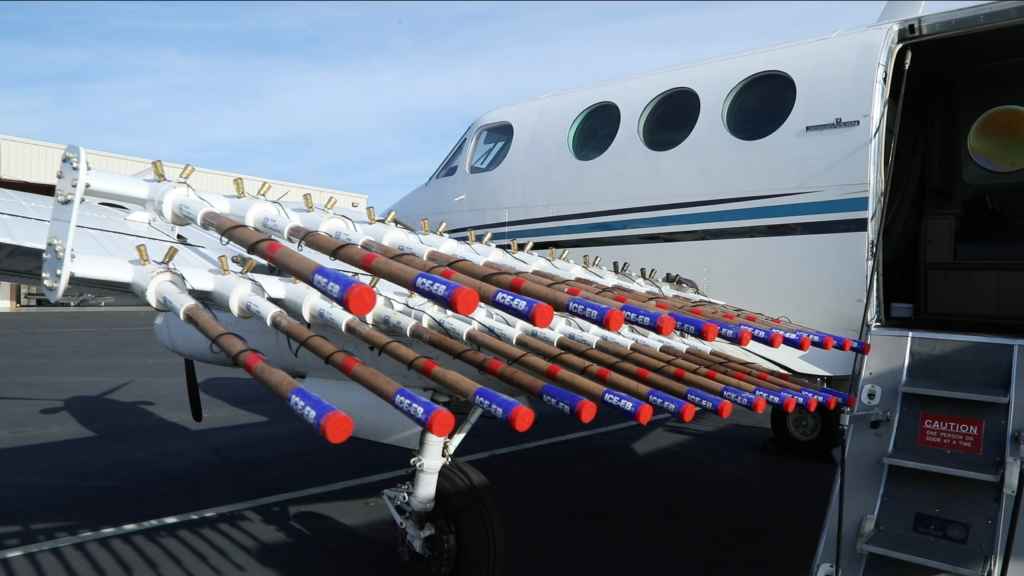
These particles encourage the formation of ice crystals or water droplets within clouds, which then coalesce to form precipitation. The process typically involves aircraft or ground-based generators releasing the seeding agents into the atmosphere.
Applications of Cloud Seeding
Cloud seeding has found applications across various regions and sectors, primarily for:
- Agriculture: Farmers in drought-prone areas rely on cloud seeding to induce rainfall, ensuring water supply for crops.
- Water Resource Management: Municipalities use cloud seeding to replenish reservoirs, lakes, and rivers, crucial for drinking water supplies.
- Weather Hazard Mitigation: Some regions employ cloud seeding to prevent severe weather events. For example, seeding can dissipate airport fog to improve visibility and safety.
- Snowfall Enhancement: In mountainous regions, particularly for ski resorts, cloud seeding increases snowfall, thus boosting tourism and ensuring adequate water supply during spring melts.
Consequences and Environmental Impact
While cloud seeding offers potential benefits, it also raises several environmental and health concerns:
- Ecological Impact: Introducing chemical agents into the atmosphere may have unintended consequences on local ecosystems. Although considered low-risk, the accumulation of silver iodide in water bodies is still a subject of environmental scrutiny.
- Weather Patterns: Amid the ongoing debate about the impact of cloud seeding on natural weather patterns, some scientists worry that altering precipitation in one area could lead to drier conditions in another, potentially disrupting regional climate balances.
- Health Risks: Though the chemicals used in cloud seeding are generally deemed safe, prolonged exposure or high concentrations could pose health risks to humans and wildlife.
Debate and Ethical Considerations
The practice of cloud seeding is not without controversy, dividing opinion among scientists, policymakers, and the general public:
- Effectiveness: There is ongoing debate over the efficacy of cloud seeding. While some studies indicate a moderate increase in precipitation, others suggest the results are negligible or inconclusive. The challenge lies in distinguishing human-induced changes from natural variability.
- Equity and Governance: Cloud seeding raises questions about who controls weather modification technology and who benefits from it. There is concern over equitable access, particularly in transboundary regions where seeding in one country could affect the weather in another.
- Ethical Implications: The notion of humans manipulating weather systems prompts ethical discussions about the extent to which we should interfere with nature. Critics argue that our understanding of atmospheric systems cannot justify large-scale interventions.
Conclusion
Cloud seeding represents an intersection of science, technology, and environmental ethics. Its potential to alleviate drought, enhance water supplies, and mitigate weather hazards is balanced by concerns over environmental impact, effectiveness, and equitable access.
As climate change challenges global water resources and weather stability, the debate over cloud seeding will likely intensify, leading to further research and careful consideration of its long-term implications.
Whether embraced as a tool for sustainability or viewed with skepticism, cloud seeding remains a testament to humanity’s enduring quest to harness and harmonize with the forces of nature.
 data jungle adventures
Leave a comment