Following up on our previous blog post, At the intersection of landscape architecture, urban design, and ecology, we go through the resilience tactics of the five urban system in biourbanism:
Economy, Energy, Infrastructure, Mobility, Technology
Economy
“…The economy of a city is all the activity related to the production, consumption, and trade of goods and services. Each city’s economy is influenced by its culture, laws, history, and geography….”.
Adrian McGregor, 2022, p. 249
The economy resilience tactics, according to McGregor, mainly relate to:
- Enhancing competitiveness through removing fossil-fuel subsidies, establishing a global NASDAQ for the environment, maximising renewables use, accounting for natural capital on the city balance sheet, and taxing polluters.
- Urban regeneration through implementing a policy framework for city deals and capturing uplift value
- Encouraging angel investment through developing financial vehicles to cluster startups and nurturing creative and knowledge industries.
- Plan for jobs distribution through establishing jobs disruption task forces, intervening in housing policy, and promoting labor market flexibility
- Debt through maintaining a manageable debt service ratio
Energy
“…The energy system of a city is made up of an ecosystem of infrastructure including power generation, transmission, shipping, storage and consumption. Energy networks are increasingly driven by smart technologies….”
Adrian McGregor, 2022, p. 271
Resilience tactics related to energy encompass:
- Create energy resilience to disruption by transitioning to renewables, investing in battery storage systems, decentralising the energy grid, underground power services, and increasing energy security.
- Reduce consumption through reducing electrical energy use per capita, reducing energy consumption of public buildings and infrastructure, and utilising sustainable design principles.
- Deploy smart precincts by establishing smart precincts and enabling smart grid technologies.
Infrastructure
“…The cities of today rely upon an immense web of hard infrastructure and services such as buildings, industries, streets, rail, roads, shipping ports, airports and utilities to support their inhabitants….”
Adrian McGregor, 2022, p. 285
Resilience tactics related to infrastructure encompass:
- Urban form through creating growth boundaries to limit sprawl, having a fifteen-minute city, leveraging investment to unlock potential, creating a bullish place economy, promoting design excellence, ensuring solar access to public space, conserving and adapting heritage, flexible zoning for 24/7 city, encouraging innovative building typologies, utilising waterfronts for amenity, maximising business infrastructure in lower-order centres, maximising walkability, and retrofitting suburbia.
- Improve informal settlements by managing slums compassionately
- Green up grey infrastructure by converting grey to blue and green and covering the city in green
- Encourage green buildings through incentivising new green buildings and incentivising retrofit of existing buildings
Mobility
“…The ability of citizens to travel quickly and cheaply from workplace to home and essential services by public transportation has a qualitative impact on their health and wellbeing….”
Adrian McGregor, 2022, p. 301
Resilience tactics related to mobility encompass:
- Car as a service through incentivising EV uptake, embracing parking disruption, managing congestion, and deploying EV charging stations
- Aerial transport through aerial motorways
- Public transport network through investing in public transport, end-to-end trip planning, and promoting active transport.
- Aerotropolis clusters through developing airports as global service clusters
- Walkability through maximising walkability
Technology
“…After conquering industrial mechanisation, humans are now using digital means to delve into the nano scale. Big data is increasingly driving decision-making….”
Adrian McGregor, 2022, p. 317
Resilience tactics related to technology encompass:
- Smart city dashboards through booting up smart city dashboard, optimising energy and water system, investing in infrastructure, and nurturing technological agility.
- Open-source planning data by allowing access to public data and moving to digital engineering
- Utilise environmental rating tools by adopting best practice, moving to life-cycle assessment, and adopting precinct digital modelling
- Industry through planning for automation, focusing on cybersecurity, and adopting blockchain and distributed trust!
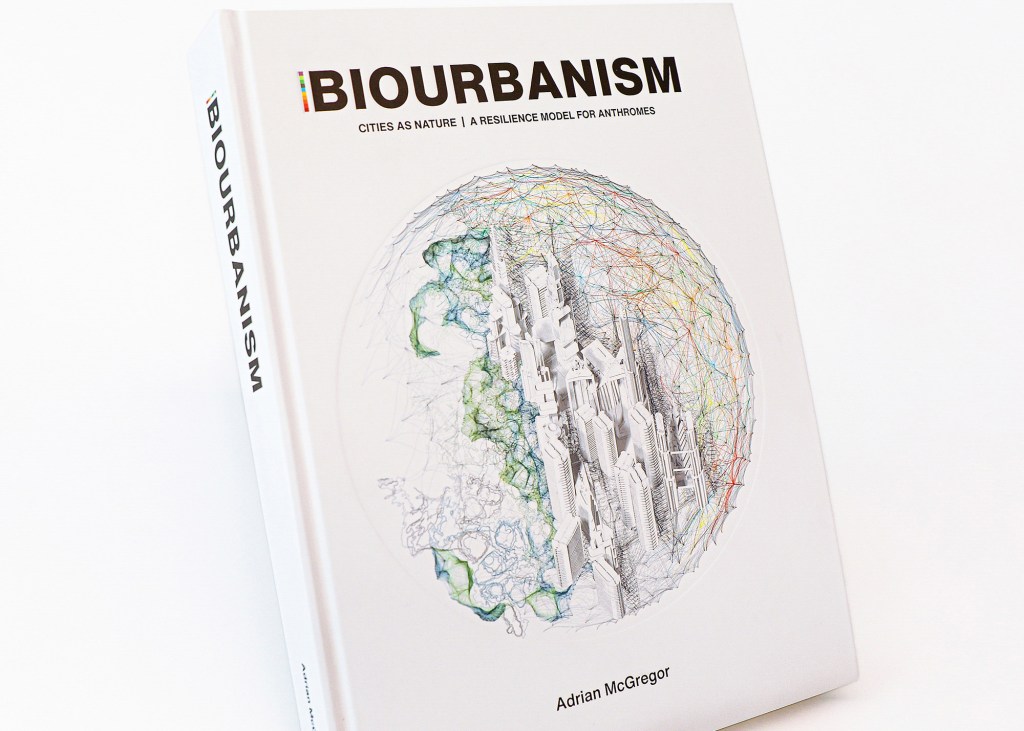
And yet, more to come from Biourbanism! While heading towards an action plan, McGregor concludes his book with the “Biourbanism in action” (BioRAP).
This action plan is meant to “adopt a phased onboarding and implementation workflow” through establishing the city story, setting up a resilience dashboard, mapping city data, establishing opportunities and challenges, setting targets with priorities, testing design scenarios, developing an action plan, deploying policies, monitoring progress, and, finally, adapting (Adrian McGregor, 2022, p. 335).
So, which is your preferred city? And would you like to start establishing its story?
Have a Happy Biourbanism Journey!!
 data jungle adventures
Leave a comment