The global biodiversity data aggregator GBIF holds just above 440,000 records for the Kingdom of Saudi Arabia across all species, genera and administrative regions.
Does this reflect the status of living organisms in terms of abundance and diversity?
Also, a large part of the Arabian Peninsula is hyper-arid; it is climatic and environmentally diverse it does not only consist of vegetation-free dune systems. Compared to tropical or Mediterranean regions, KSA is relatively sparsely vegetated but not free of flora and fauna. Here we look at the data available for KSA on GBIF.
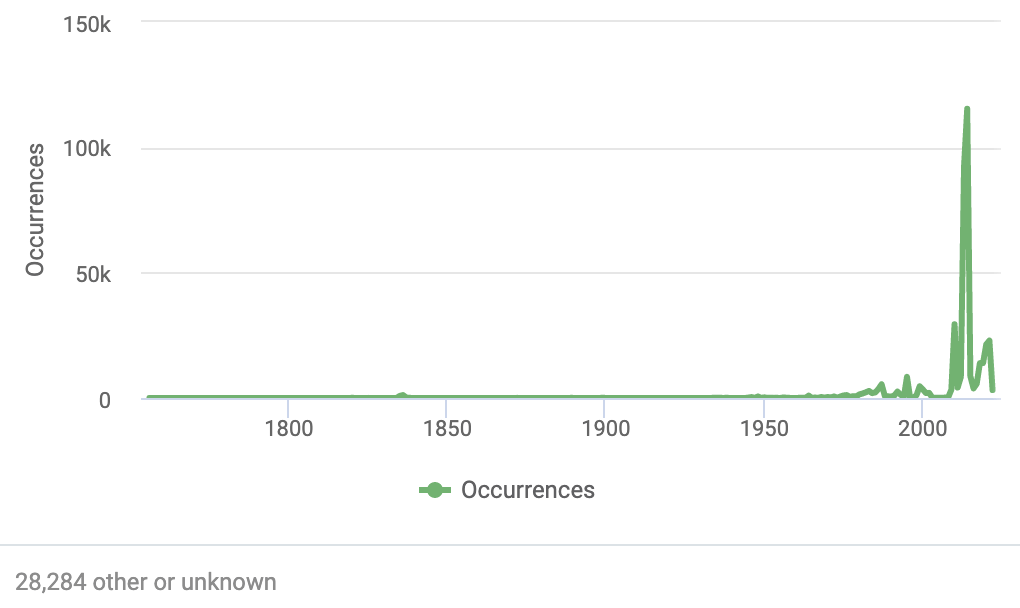
The global biodiversity data aggregator GBIF holds 440,630 records for the KSA, covering 10,289 species across all kingdoms, genera and admin regions. The vast majority is dated after 2009, with only a few records before the oil discovery.
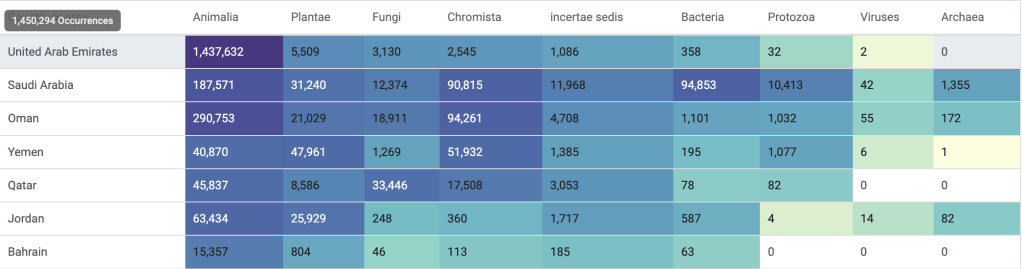
KSA’s significantly smaller neighbour Oman holds as many biodiversity observations, while other countries (Yemen, Qatar, Jordan) on the peninsular only show ¼ of KSA’s biodiversity data. Desert ecosystems are highly specialised, and hostile to visit for most humans. Most activity happens below ground and at night, making observations by citizen scientists are less common and obvious.

Also noteworthy is the large contribution of material samples, commonly submitted as part of DNA studies for first discoveries, hybridisation assessments, or distinguishing populations, subspecies, varieties or species.
While bird data sets contribute the most, marine sediment and algae, datasets cumulatively exceed the number of submitted contributions, highlighting that most recent research focuses on the marine environment.
KSA ranks second compared to neighbouring countries’ biodiversity data volume. Chromista is studied very intensely, and submissions exceed plants and fungi combined. Saudi Arabia also stands regionally out in terms of Bacteria and Protozoa occurrences.
Explore KSA biodiversity data here!
Complete?
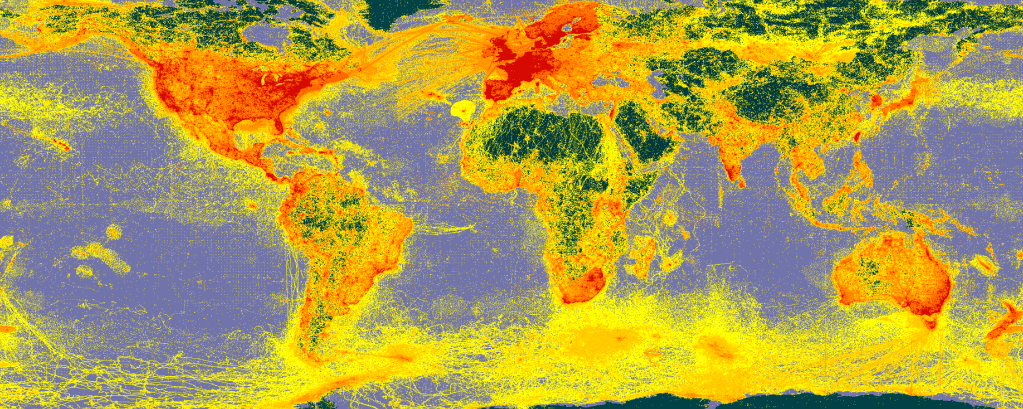
The data submitted is a good basis and evidence of structured surveys submitting occurrence records lately. With the recent commitment towards greening initiatives and sustainabilities and the creation of planning and management authorities for protected areas and wildlife, we are likely to see a boost in biodiversity data collected and mobility to the international data aggregator allowing more biogeographic and macroecological studies. For now, it is unlikely to be a near-complete coverage or a representative sample of the biodiversity in the Kingdom, with the underrepresentation of animals and plants.
Mobilisation
Biodiversity data mobilisation refers to collecting, sharing, and making accessible information about the variety of life on Earth. This includes information about different species, their distribution, and the ecosystems in which they live. In Saudi Arabia, as in many other countries, this data is important for understanding and managing the country’s natural resources and making informed decisions about conservation and sustainable development.
So, mobilisation of first discoveries from the era of oil discovery slumbering in herbaria and museums abroad will open an understanding of the impact of the fast-growing urban developments on biodiversity.
National biodiversity atlas
Up to today, Saudi Arabia’s biodiversity data has been published through predominantly European institutions. KSA universities and research may stations hold large flora and fauna data, which are currently not easily accessible to the national and international science community.
Establishing a national web-based biodiversity database (or Virtual Herbarium) can facilitate data collection (citizen science), mobilisation, curation and sharing and motivate contributors outside the scientific community. A web-based system similar to the Atlas of Living Australia can provide the following:
- standardised biodiversity data for research and informed environmental planning (e.g., species distribution modelling for indigenous and invasive species, land use changes)
- alignment with the national vision and green initiatives, and enhancement of Saudi Arabia’s reputation in biodiversity management and conservation
- Capacity building and training in ecological surveys methods, modelling and environmental planning on an academic and technical level
- Increased environmental awareness through citizen science
- Collaboration and, more important, the contribution of historic data set from all national organisations (university, ministers, museums and research centres)
While a national atlas is one step towards capacity building in biodiversity and biodiversity-related subjects some great positive ‘side-effects’ can be expected. For example
- The development of professionals in new fields of knowledge and new interfaces, such as biodiversity informatics, image services, and geographic information systems.
- The production of improved teaching material, such as field guides, identification keys, image databases, and online information for students and educators.
- Improved guides and information resources for use in ecotourism.
- Improved publishing rates in taxonomy as researchers spend less time on identifications and making data available on an individual basis.
- Improved linkages with local people for collecting, ecological research and preliminary identification using para-taxonomists; transfer of some of the burden of sorting and preliminary identification of field samples from the extremely small number of highly-skilled taxonomists to technically-skilled para-taxonomists.
- Development of new sources of funding for supporting collections.
 data jungle adventures
Leave a comment